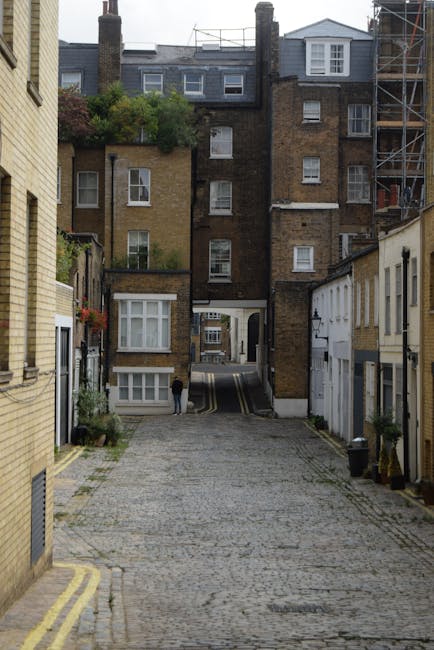
Common problems gardeners face in Limehouse narrow alleys
Limehouse has its own gardening personality. Between slim side passages, shared walkways, brick walls, and those awkward little gaps where a wheelbarrow barely fits, even a simple tidy-up can turn into a logistical puzzle. The common problems gardeners face in Limehouse narrow alleys are not just about squeezing tools through a tight space; they affect plant health, access, waste removal, safety, and how much can realistically be done in one visit.
If you have ever looked at a narrow alley and thought, "It's only a small space, how hard can it be?" well, the answer is: sometimes harder than a big garden. That is especially true in dense parts of East London, where light levels, damp conditions, neighbour access, and storage limitations all come together. This guide breaks down the practical issues, explains why they matter, and shows how to deal with them without making the work more frustrating than it needs to be.
To make this genuinely useful, we will cover the real bottlenecks gardeners run into, the best working methods, a comparison of approach options, and a checklist you can use before any visit. If you are planning ongoing care, you may also find it helpful to look at garden maintenance, garden clearance, and the broader services overview.
Table of Contents
- Why common problems in Limehouse narrow alleys matter
- How gardening work in narrow alleys usually works
- Key benefits and practical advantages of planning well
- Who this is for and when it makes sense
- Step-by-step guidance for handling narrow alley jobs
- Expert tips for better results
- Common mistakes to avoid
- Tools, resources and recommendations
- Law, compliance, standards, and best practice
- Options, methods, and comparison table
- Case study or real-world example
- Practical checklist
- Conclusion
- Frequently asked questions
Why Common problems gardeners face in Limehouse narrow alleys Matters
Narrow alleys can look minor on a site plan, but they often decide how easy a job will be. In Limehouse, a garden may be reached through a side alley shared with bins, bikes, washing lines, old paving, or an unexpected garden gate that opens inward and blocks half the route. That means access is not a small detail. It is the job.
The problems matter because they affect three things at once: time, quality, and safety. When movement is restricted, tasks take longer. When the layout makes it awkward to reach corners, the result can be patchy. And when surfaces are damp, uneven, or cluttered, trips and strains become more likely. To be fair, that is not dramatic; it is just practical reality.
Another reason it matters is that poor planning in a narrow alley often causes avoidable damage. Hedges get bruised by repeated contact, pots get knocked, gates catch on tools, and freshly cut material ends up dragged across paving. A little thought upfront saves all that. The nice part is that most of these issues can be managed with the right routine and realistic expectations.
Expert summary: In Limehouse, narrow-alley gardening works best when access, waste handling, and tool choice are planned before the first cut or trim. The job is usually less about brute force and more about sequencing.
If you are arranging regular care rather than one-off work, the structure of garden maintenance can make a big difference because it keeps growth under control before passageways become fully blocked. For heavier overgrowth, a tidy reset through garden clearance may be the more realistic first step.
How Common problems gardeners face in Limehouse narrow alleys Works
Gardening in a narrow alley is really a sequence of small decisions. First comes access. Then comes the order of work. After that, there is the question of where clippings, waste, water, and tools go while the job is underway. If those pieces are arranged badly, the alley becomes cluttered almost immediately. If they are arranged well, the job feels calmer, quicker, and oddly enough, less tiring.
Most narrow-alley jobs in Limehouse follow a similar pattern:
- Inspect the route from street to garden.
- Check gate width, step height, surface condition, and turning space.
- Identify what needs trimming, mowing, clearing, or lifting.
- Choose compact tools that match the access constraints.
- Work from the furthest point back toward the exit.
- Collect waste in manageable loads instead of building a large pile.
- Do a final sweep for debris, muddy patches, and trip hazards.
That sounds simple, but narrow spaces magnify small mistakes. A full-size mower that would be fine in an open lawn can become a nuisance in a cramped passage. Long-handled tools can be useful, but only if they can be rotated without snagging walls. Even the timing matters. A damp morning can make a cramped alley feel twice as awkward, especially where moss or algae have settled on paving.
The main technical challenge is not usually the plant work itself. It is movement. Gardeners spend a surprising amount of energy shifting themselves, their bags, and their tools around the space. That is why compact, repeatable routines work so well. You want the job to feel almost choreographed, not improvised every ten minutes.
In some cases, the alley also shapes what kinds of services are practical. A hedge that is easy to reach from the front may be much harder to access along a narrow rear route. Likewise, tree work may need extra planning if branches overhang the only access point. If that sounds familiar, it may be worth looking at hedge trimming, tree lopping and removal, or lawn mowing depending on the specific issue.
Key Benefits and Practical Advantages
It might feel strange to talk about benefits when the topic is basically "what goes wrong," but there are real advantages to understanding narrow-alley work properly. Once you know the pressures, you can plan around them and get a better result with less hassle. That matters whether you are a homeowner, a landlord, or a gardener trying to keep a route clear between jobs.
- Cleaner access: fewer blockages, fewer awkward turns, less backtracking.
- Better plant health: careful movement reduces accidental damage to stems, borders, and roots.
- Safer working conditions: less clutter means fewer trips, slips, and tool collisions.
- More efficient waste removal: clippings and debris are handled in smaller, neater loads.
- Less neighbour disruption: tidy movement and shorter on-site handling usually create less noise and mess.
- Lower long-term cost: regular care prevents the alley from becoming a full clearance project later on.
There is also a quieter benefit: less stress. Honestly, a lot of narrow-space gardening frustration comes from having to solve the same access problem again and again. When the layout is understood and the routine is set, the whole thing becomes more manageable. Not glamorous. Just easier. And sometimes easier is exactly what you need.
For property owners thinking ahead, this can also be a good time to consider whether nearby surfaces or structures need attention too. In some yards, a compact path works better once minor landscaping changes are made, or once a broken edge, uneven slab, or unusable strip is dealt with through landscaping or more tailored landscape gardening.
Who This Is For and When It Makes Sense
This topic is relevant to anyone dealing with a garden that sits behind a tight access route, but a few groups will feel it most strongly.
Homeowners with rear-access gardens
If your only way into the garden is a narrow side passage, you already know the story. Pots get moved, bins stay in the way, and one overgrown shrub can suddenly swallow the route. Regular upkeep is usually the difference between "a bit fiddly" and "absolutely impossible."
Landlords and managing agents
For rental properties, narrow alleys are often overlooked until they become a complaint. Then it is suddenly urgent. Keeping access clear can help prevent avoidable disputes, and it makes inspections cleaner. It also supports a better first impression, which is never a bad thing.
Gardeners and maintenance teams
Professionals working in Limehouse need to think beyond plant care. They need to think about entry points, storage, the direction of work, and whether waste can be removed without creating a mess in shared areas. That is the difference between an average visit and a smooth one.
People planning seasonal tidy-ups
Spring and late summer are common moments when narrow alleys suddenly feel tighter because growth has surged. If the route has been ignored for a while, one visit may not be enough. That does not mean the job is failing. It just means the space is asking for phased work.
If you are unsure whether you need a one-off reset or an ongoing plan, compare your current state with the service structure on services overview and the pricing expectations on pricing and quotes. Sometimes the sensible choice is not the cheapest one today, but the one that prevents repeated headaches later.
Step-by-Step Guidance
Here is a practical way to handle narrow alley work without making it feel chaotic. It is not fancy, but it works.
1. Start with a slow access check
Walk the route from the street to the work area before you unload anything. Look for tight corners, low overhead branches, slippery patches, and gates that open the wrong way. A thirty-second scan can save a lot of shuffling later.
2. Remove obvious obstructions first
Move bins, loose pots, hosepipes, toys, and anything else sitting in the way. In narrow spaces, one stray item becomes a bottleneck very quickly. This is the sort of thing people overlook because it looks harmless. Then your mower catches it. Annoying, really.
3. Work from the back toward the exit
That reduces the need to walk over freshly cut or cleared sections. It also keeps the route open for carrying waste out. In tight alleys, direction matters more than people expect.
4. Use tools that suit the access
Choose compact, lightweight, or foldable tools where possible. Long handles can help reach awkward areas, but they must be practical in the available turning space. If a tool is technically correct but constantly snagging the wall, it is the wrong tool.
5. Collect waste in stages
Do not leave a mountain of clippings in the middle of the passage. Bag, bundle, or stack waste in smaller loads. This is especially important where the alley doubles as a shared access route or where the surface becomes slick when damp.
6. Finish with a proper sweep and check
Clear loose debris, check for mud at the entrance, and make sure nothing has been left leaning against a wall or gate. Tiny details matter more in narrow spaces because they can block the next visit completely.
Some jobs also need a reset before routine care can begin. If the alley is packed with old growth, dead leaves, broken containers, or a mix of everything, a focused garden clearance can make the following maintenance far easier.
Expert Tips for Better Results
These are the little habits that make narrow-alley gardening noticeably smoother. None of them are dramatic, but each one saves time and irritation.
- Keep one hand free. In tight routes, it helps to steady yourself or move a latch, bag, or gate without stopping completely.
- Use shorter working bursts. Narrow spaces can feel mentally busier than open gardens. Short passes keep the job tidy and reduce mistakes.
- Bundle cuttings early. Waiting until the end often creates a mess that is harder to move through a narrow route.
- Protect edges and walls. A quick visual check before turning a tool can prevent scuffs on render, paint, or brick.
- Think about the weather. A wet alley can change everything. Moss, leaves, and shaded paving get slick fast, especially in the morning.
- Do not overfill bags. Overloaded waste bags are awkward enough in a normal garden; in a narrow alley they are a recipe for strain.
One thing we see quite often is people trying to do too much in a single session. That is understandable. You want progress. But narrow access punishes ambition a bit. Split the work if needed. It is not laziness; it is sensible working.
If overgrown hedges are part of the issue, it can help to combine access work with hedge trimming so the path itself stays usable. And if the route is being damaged by repeated overflow from nearby trees or shrubs, tree lopping and removal may be worth discussing carefully.
Common Mistakes to Avoid
A lot of narrow-alley problems come from the same handful of mistakes. The good news? They are all avoidable once you know what to watch for.
Forcing oversized equipment through the route
If a mower or trimmer barely fits, it will likely slow everything down. People sometimes try to make it work anyway, and that is usually where damage starts. Walls get scraped. Plants get flattened. Tempers rise a bit.
Ignoring waste strategy
Planning the cut but not the removal is a classic mistake. In a narrow alley, waste has to leave the site just as carefully as it entered. If there is no clean route out, the job clogs itself.
Leaving slippery debris behind
Wet leaves, grass clippings, and soil can make a narrow passage hazardous. A quick final clean-up is not optional. It is part of the job.
Assuming all alleys are the same
Some are straight. Some bend. Some have steps, low lintels, or sudden width changes. Treating them all as one standard setup leads to avoidable delays.
Skipping a pre-visit conversation
When a job involves a home, shared space, or tight access, it helps to know about locked gates, bin collection times, neighbour concerns, or pets before arriving. Saves a lot of awkwardness. And yes, people forget to mention these things all the time.
Overlooking safety and insurance basics
If tools are being carried through communal or awkward access, the working method should be sensible and covered by proper business practices. For any professional arrangement, it is reasonable to check insurance and safety information and understand how problems are handled through the published complaints procedure if something does go wrong.
Tools, Resources and Recommendations
The best tools for narrow alley gardening are usually the ones that are light, compact, and easy to manoeuvre. That does not mean "cheap" or "basic"; it means suitable. A smaller tool used well is better than a bigger one you have to wrestle with.
| Tool / approach | Best for | Why it helps in narrow alleys | Potential drawback |
|---|---|---|---|
| Hand shears | Light pruning and shaping | Precise, quiet, and easy to carry through tight spaces | Slower for larger jobs |
| Compact hedge trimmer | Small to medium hedge work | Better manoeuvrability near walls and gates | Can still snag if the alley is extremely tight |
| Lightweight mower or strimmer | Small lawn sections | Easier to lift, turn, and store in restricted access areas | May need more passes than a larger machine |
| Rubber-backed debris bags | Clippings and cuttings | Reduces mess when carrying waste through shared routes | Can be bulky if overfilled |
| Foldable hand cart | Moving tools or waste | Useful where wheelbarrows are too wide or awkward | Not ideal for very uneven surfaces |
Alongside tools, a few broader resources make a difference:
- Good site notes: access width, gate locks, and surface issues recorded before work starts.
- Clear scheduling: avoid bin collection mornings or times when the alley is busiest.
- Regular upkeep plan: keeps pathways from becoming overwhelmed in the first place.
- Responsible waste handling: sort green waste so it can be removed efficiently and in line with normal local expectations.
For jobs involving surfaces or built structures near the passage, you may also need to think about decking services if the area has a raised or slippery transition, and about recycling and sustainability if the amount of green waste is significant.
Law, Compliance, Standards, or Best Practice
Because narrow alley work often touches access, shared spaces, and physical safety, it is worth approaching it with basic UK best practice in mind. This is not the place for casual improvisation.
For professional gardeners, the sensible expectations are straightforward: work carefully, avoid creating hazards, protect neighbouring property, and make sure waste handling is responsible. If an alley is communal or shared, it is also wise to be mindful of access rights and not leave obstructions behind. That sounds obvious, but in practice it is where problems begin.
Health and safety should cover the basics: sensible lifting, tidy tool placement, awareness of slips and trips, and care when moving around sharp or powered equipment. If surfaces are wet, shaded, or uneven, extra caution is common sense rather than bureaucracy. There is no prize for hurrying through a narrow passage and catching your shin on a bucket.
Best practice also includes respecting neighbours and occupiers. That means keeping noise reasonable, not blocking the route for longer than necessary, and communicating if a section of the alley needs to be temporarily unavailable. Good gardening is often just good manners with gloves on.
If you are comparing providers, it is reasonable to review a company's about us page for practical experience and service approach, along with its health and safety policy and payment and security information. That is not overthinking it. It is due diligence.
Options, Methods, or Comparison Table
There is no single "best" way to handle a narrow alley. The right method depends on how tight the access is, how much growth there is, and whether the space is shared or private. Here is a simple comparison.
| Method | When it works best | Pros | Cons |
|---|---|---|---|
| Regular light maintenance | When growth is controlled and access stays clear | Fast, tidy, lower disruption | Needs consistency |
| Phased clearance then maintenance | When the alley is already congested | Feels more manageable, easier to reset | Takes more than one visit |
| Full clearance first | When access is blocked or heavily overgrown | Creates space for future upkeep | More labour and waste handling |
| Combined trimming and boundary shaping | When hedges or shrubs are narrowing the route | Improves access and appearance together | May need careful planning near neighbours |
The choice often comes down to one simple question: do you want to maintain the space, or do you need to recover it first? If the answer is "recover it," then clearance is the starting point. If the answer is "keep it under control," maintenance is probably the better fit. Easy to say, yes, but that distinction saves a lot of wasted effort.
Case Study or Real-World Example
Consider a typical Limehouse rear alley: narrow enough that two people can pass only if one turns sideways, with pots stored along one wall, a modest hedge overhanging near the gate, and a lawn patch at the far end that has gone soft and uneven after a few wet weeks. Nothing dramatic. Just awkward.
On the first visit, the practical issues are not the plants themselves. They are access, clutter, and movement. The route needs to be cleared before any serious cutting begins. The pots are moved to a safer corner, the hedge is reduced just enough to restore clear passage, and waste is bagged in smaller loads so the alley does not become blocked halfway through.
On the second visit, the difference is obvious. The same route now feels less cramped, because the overgrowth is under control and the footpath edge is visible again. The gardener can mow or strim without constantly stopping to untangle a tool or shift a bag. The owner sees something simple but valuable: the space is usable again.
What changed? Not magic. Just the order of work. The first job focused on access recovery; the next could focus on routine care. That is the real lesson with narrow alley spaces. If you treat them as a sequence, not a single heroic effort, the results improve fast. And the whole thing becomes, well, much less faff.
Practical Checklist
Use this before any narrow-alley gardening visit in Limehouse.
- Check gate width and any awkward bends before unloading tools.
- Move bins, pots, bikes, and loose items out of the route.
- Confirm whether the passage is shared, private, or time-restricted.
- Choose compact tools suitable for limited turning space.
- Plan the work from the furthest point back toward the exit.
- Set aside a clear area for temporary waste storage.
- Avoid overfilling bags or trying to carry too much at once.
- Watch for damp paving, moss, and uneven slabs.
- Trim encroaching growth before it narrows the route further.
- Finish with a sweep and final access check.
- Review whether the job needs ongoing maintenance or a one-off clearance.
Quick takeaway: If access is tight, plan like a mover, work like a gardener, and finish like a housekeeper. That combination sounds simple, but it is usually what keeps narrow-alley jobs efficient and tidy.
For recurring work, the smartest next step is often to pair maintenance with a clear service plan. You can explore options through garden maintenance and, if the space needs a reset first, garden clearance.
Conclusion
The common problems gardeners face in Limehouse narrow alleys come down to a fairly predictable mix of tight access, limited turning space, awkward waste handling, damp surfaces, and growth that creeps into the route faster than people expect. None of that makes the job impossible. It just means the work needs more thought than a standard open garden.
Once you understand the constraints, the space becomes manageable. The right tools, the right sequence, and a realistic plan can turn a fiddly alley into a straightforward part of the garden rather than the place everyone avoids. That is often the difference between a one-off struggle and a garden that feels looked after all year.
If you are weighing up your next step, start with the access route, then decide whether the job needs ongoing care or a proper clear-out. That small bit of planning pays off more than people think. And honestly, it makes the whole experience a lot calmer.
Get a free quote today and see how much you can save.
If you want to understand more about the team behind the service, take a look at about us or get in touch through the site's usual contact route when you are ready. A better garden in a narrow space is often just one good plan away.
Frequently Asked Questions
Why are narrow alleys such a problem for gardeners in Limehouse?
Because they limit movement, restrict tool choice, and make waste removal more difficult. In a tight alley, even a small obstruction can interrupt the whole job.
What is the biggest mistake people make with narrow garden access?
Trying to use tools that are too large for the route. That usually leads to damage, wasted time, and unnecessary strain.
How do gardeners deal with waste in a narrow alley?
They usually bag or bundle waste in smaller loads and remove it in stages. That keeps the passage clear and reduces the risk of slips or blockages.
Do narrow alleys need more regular maintenance?
Usually, yes. Small spaces can become congested quickly, so lighter but more frequent upkeep is often better than waiting for a full clear-out.
Can hedge trimming help if the alley is getting too tight?
Absolutely. If shrubs or hedges are narrowing the passage, careful trimming can restore access and make future work much easier.
Is garden clearance better than maintenance for badly overgrown alleys?
Often it is. If the space is already blocked or cluttered, clearance gives you a reset before routine maintenance can be effective again.
What tools are most useful in a tight Limehouse alley?
Compact shears, smaller trimmers, lightweight mowers or strimmers, and manageable waste bags are usually the most practical choices.
Are narrow alleys more dangerous when wet?
Yes. Damp paving, moss, and fallen clippings can make them slippery, especially in shaded or enclosed passages.
Should neighbours be considered before work starts?
Definitely. If access is shared or close to neighbouring property, it is courteous and practical to check timing, noise, and temporary obstruction issues in advance.
How do I know whether I need one-off clearance or ongoing maintenance?
If the alley is blocked, cluttered, or heavily overgrown, start with clearance. If the route is already manageable, regular maintenance is usually enough to keep it that way.
What should I ask a gardener before hiring them for a narrow alley job?
Ask how they handle access, what tools they use, how waste is removed, and whether they have proper insurance and safety procedures in place.
Can landscaping improve a narrow alley long term?
Yes, in some cases. Small design changes, better edges, or smarter use of surfaces can make the route easier to maintain and less prone to congestion.